The Company Behind the Games
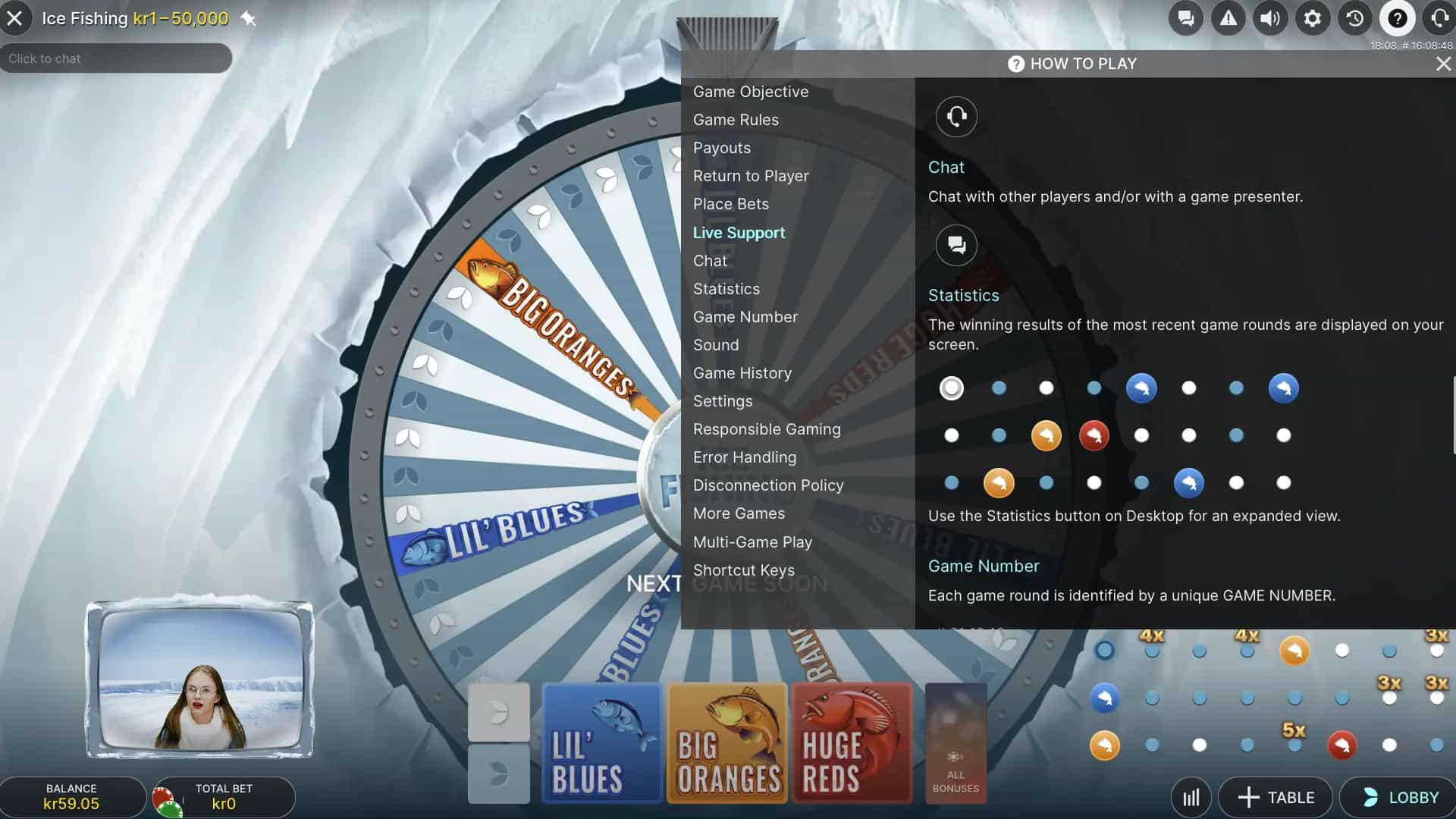
Evolution was founded in 2006 with a single idea: bring the experience of a real casino floor to online players through live video streaming. What began as a small operation offering live Blackjack and Roulette from a single studio has grown into a publicly listed company with a market capitalisation in the billions and a workforce numbering in the tens of thousands. The company's shares trade on Nasdaq Stockholm under the ticker EVO, and its financial results are reported quarterly to institutional investors and the public alike.
The scale of Evolution's operation is difficult to overstate. The company runs dedicated live-dealer studios in Latvia, Malta, Georgia, Romania, Canada, the United States, and several other jurisdictions, each equipped with broadcast-grade cameras, professional lighting rigs, and the proprietary technology that powers real-time game delivery to players worldwide. These studios operate around the clock, streaming hundreds of simultaneous table and game show sessions at any given moment. The production quality rivals that of commercial television — a deliberate choice by a company that understands the visual experience is inseparable from the gameplay experience in the live casino space.
Evolution's client list includes many of the largest online casino brands operating in Australia and internationally. Operators integrate Evolution's games into their own platforms via a standardised API, which means the player experience — from video quality to betting interface to game rules — is consistent regardless of which casino site you choose. If you play Ice Fishing at one operator and then switch to another, the wheel, the segments, the multipliers, and the bonus mechanics will be identical. This B2B (business-to-business) model has made Evolution the de facto infrastructure layer for live casino globally, and it is the reason you encounter the same Evolution game lobby across dozens of otherwise competing casino brands.
Beyond its core live casino business, Evolution has expanded through acquisitions. The company acquired NetEnt, Red Tiger Gaming, Big Time Gaming, and Ezugi — each one a respected name in slots or live dealer — consolidating a portfolio that now spans virtually every segment of online casino entertainment. This breadth gives Evolution an unusual position in the industry: it is simultaneously the dominant live casino supplier and a major force in RNG slots, which means its products benefit from cross-pollination between departments. Ice Fishing, with its hybrid blend of live-hosted presentation and RNG-driven mechanics, is a direct result of that internal convergence.
Licensing and Regulatory Standing
Trust in a game provider begins with licensing, and Evolution holds credentials from some of the most demanding regulators in the online gambling industry. Each licence imposes its own set of requirements around game fairness, player protection, anti-money-laundering controls, and responsible gambling practices. Meeting these requirements across multiple jurisdictions simultaneously is an ongoing operational commitment, not a one-time achievement.
- Malta Gaming Authority (MGA): Evolution Gaming Malta Limited operates under licence MGA/CRP/187/2010/01 — the MGA is one of the most widely recognised regulatory bodies in the European online gambling market and imposes strict standards on game integrity, player fund segregation, and dispute resolution
- UK Gambling Commission (UKGC): Evolution Malta Holdings Limited is licensed and regulated in Great Britain under account number 41655 — the UKGC is considered one of the most rigorous gambling regulators globally, with extensive requirements for player safety, advertising standards, and responsible gambling tools
- Independent game certification: all Evolution titles, including Ice Fishing, undergo regular testing by iTech Labs and eCOGRA — these independent laboratories verify RNG integrity, confirm that published RTP figures match actual player returns, and audit compliance with regulatory standards on an ongoing basis
- Multi-jurisdictional presence: beyond Malta and the UK, Evolution holds licences or approvals in numerous regulated markets across Europe, North America, and parts of Asia — this global licensing footprint ensures that its games meet local legal standards wherever they are offered, and it gives operators confidence that integrating Evolution products will not create compliance risks in their own licensed territories
For Australian players, the practical implication of this licensing structure is straightforward: when you play Ice Fishing at a licensed casino, the game you are accessing has been independently verified for fairness, the RNG has been tested by third-party laboratories, and the operator is subject to regulatory oversight that includes player protection obligations. This does not guarantee any particular outcome on any given spin, but it does provide a structural assurance that the game operates as advertised.
Technology That Powers the Live Experience
Evolution's competitive edge rests on its technology stack as much as its game design. The company invests heavily in broadcast infrastructure, streaming protocols, and proprietary hardware that together create the low-latency, high-definition experience players expect from modern live casino. The gap between Evolution's production quality and that of smaller competitors is significant, and it is one of the main reasons operators continue to choose Evolution even when cheaper alternatives exist.
On the hardware side, Evolution pioneered the DigiWheel — a physical wheel embedded with digital display panels that can change segment content between spins. This technology debuted in Crazy Time and was later refined for Funky Time. It represents a hybrid approach where mechanical authenticity meets digital flexibility: the wheel physically spins, the flapper physically stops it, but the segments themselves are digitally rendered and can be reconfigured dynamically. Ice Fishing, by contrast, marks a deliberate departure from this approach. Its wheel is entirely virtual — generated and rendered in real time by the game engine. There are no physical components, no flapper, and no mechanical wear. Every outcome is determined by the RNG before the animation begins, and the visual spin is purely presentational.
This design choice reflects a strategic bet by Evolution. By removing all physical elements, the company eliminated the maintenance costs and operational constraints associated with mechanical hardware. A virtual wheel does not need calibration. It does not experience wear. It can be deployed to any number of operators simultaneously without building additional physical units. The tradeoff is that some players perceive a virtual wheel as less authentic than a physical one — a tension that Evolution acknowledges by continuing to produce physical-wheel games alongside its newer RNG-driven formats.
On the software side, Evolution's platform handles millions of concurrent bets across hundreds of tables and shows simultaneously. The streaming infrastructure delivers video at broadcast quality with minimal delay, and the mobile-first design philosophy ensures that games render cleanly on screens ranging from 5-inch smartphones to 32-inch desktop monitors. For Ice Fishing specifically, the augmented-reality fishing sequences — where a digital fish is reeled in through a virtual ice hole by the live host — showcase Evolution's ability to blend live-action footage with real-time CGI overlays. The host interacts with digital elements as if they were physically present, creating a seamless visual experience that masks the complexity of the technology running beneath the surface.
Evolution's Game Show Portfolio
Ice Fishing belongs to Evolution's Game Shows category, a collection of live-hosted entertainment formats that blend elements of television game shows with online gambling mechanics. The category has been a major growth driver for the company since the launch of Dream Catcher in 2017 and has expanded steadily with increasingly ambitious productions. Each title targets a slightly different player profile, but they all share the common thread of a central randomisation device — usually a wheel — combined with live presenter interaction and the potential for high-multiplier payouts.
| Game |
Wheel Type |
Core Mechanic |
Maximum Win |
| Dream Catcher |
Physical |
Simple money wheel with 2x and 7x multiplier segments |
500x |
| Crazy Time |
Physical (DigiWheel elements) |
Four distinct bonus games: Coin Flip, Pachinko, Cash Hunt, Crazy Time |
25,000x |
| Monopoly Live |
Physical |
Money wheel plus 3D Monopoly board bonus with Mr. Monopoly |
10,000x |
| Funky Time |
Physical (DigiWheel) |
1970s disco theme with four bonus rounds and letter-based betting |
10,000x |
| Mega Ball |
Ball draw |
Lottery-style ball draw with bingo card payouts and multiplier ball |
1,000,000x |
| Lightning Dice |
Dice |
Three dice dropped through a tower with random lightning multipliers |
1,000x |
| Ice Fishing |
Virtual (RNG) |
Speed show with three tiered fishing bonuses and progressive fish reveal |
5,000x |
Looking at this table, the progression of Evolution's game show ambitions becomes clear. Dream Catcher was a proof of concept — a minimal viable game show that proved the format could work in a live online environment. Crazy Time escalated production values dramatically, introducing four distinct bonus games and the DigiWheel technology. Monopoly Live and Funky Time continued that trajectory with branded content and thematic depth. Ice Fishing represents something different: instead of adding complexity, it stripped the format back and optimised for speed. It is a correction, not a continuation — Evolution recognising that not every player wants a five-minute bonus sequence and that there is a large audience for rapid, decisive outcomes.
Where Ice Fishing Fits in the Evolution Catalogue
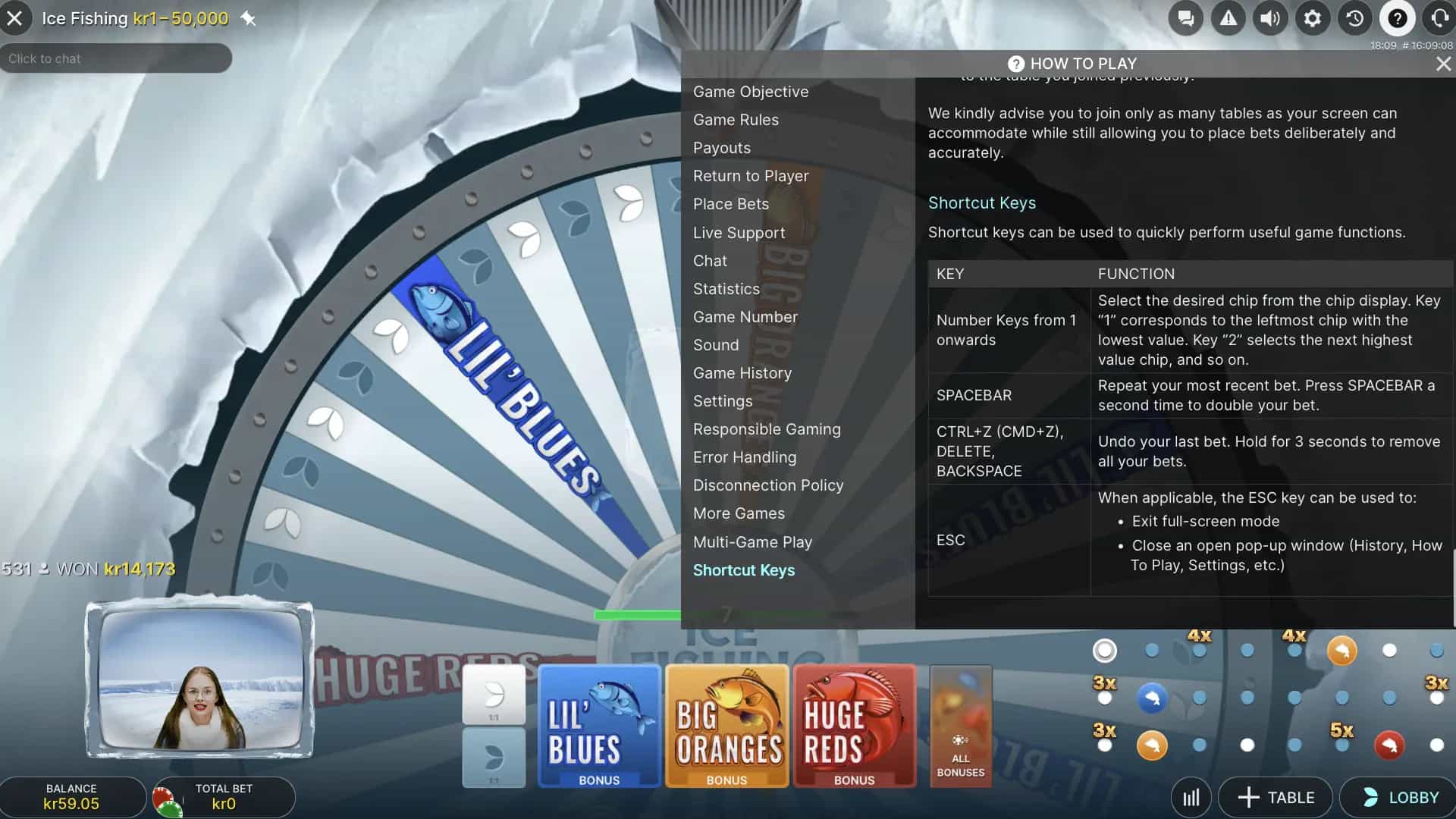
Ice Fishing was not designed to replace Crazy Time or compete directly with Monopoly Live. It was built to fill a gap in Evolution's lineup — the speed segment. Evolution's Chief Product Officer, Todd Haushalter, described the motivation in clear terms: the company saw a growing audience that craves faster, more instantly gratifying formats. Traditional game shows like Crazy Time can run bonus rounds that last several minutes; Ice Fishing resolves everything in under 60 seconds. That difference in tempo is the entire point of the product.
The game also represents a philosophical shift in how Evolution approaches live content. By removing the physical wheel entirely and relying on a virtual RNG-driven graphic, the studio eliminates mechanical constraints — there is no need to calibrate a flapper, maintain bearings, or account for physical wear over thousands of spins per day. The tradeoff is that some players perceive a virtual wheel as less authentic than a physical one, but the RNG certification from iTech Labs and eCOGRA provides the same mathematical assurance of fairness that applies to every other Evolution product.
Open the Verified Game Route
Within the broader Evolution ecosystem, Ice Fishing appeals to a player profile that overlaps with online slots more than with traditional live-dealer table games. The rapid pace, the single-action betting structure, and the RNG core all echo slot mechanics, while the live host and augmented-reality bonus rounds add the social dimension that pure slots lack. It is a hybrid product in the truest sense — half slot, half show — and it occupies a position in Evolution's catalogue that no other title currently claims. Players who enjoy the speed of slots but miss the human interaction of live dealer games will find Ice Fishing sits exactly at the intersection of those two experiences.
From a business perspective, Ice Fishing also serves as a test case. If the speed game show format resonates with players — and early engagement metrics suggest it has — Evolution is likely to develop additional titles in this category, each with different themes and mechanics but the same emphasis on rapid-fire resolution. Ice Fishing may be the first, but it is unlikely to be the last of its kind.
Reasons Players Trust Evolution's Products
Evolution's dominance in the live casino space is not accidental. It is built on a set of operational standards that have accumulated over nearly two decades of continuous improvement. For Australian players evaluating whether to spend time and money on an Evolution product like Ice Fishing, understanding what those standards are — and why they matter — provides context beyond the game itself.
- Broadcast-grade production quality: every game is streamed from a purpose-built studio with professional lighting, multiple camera angles, and high-definition video — the visual experience is designed to feel closer to watching a television show than playing a standard online casino game, and the investment in production values is immediately apparent when you load any Evolution title
- Trained live presenters: hosts undergo extensive preparation before appearing on camera, covering everything from game rules and payout mechanics to on-camera presence and player interaction — the result is smooth delivery, accurate result calls, and genuine engagement with the player chat, which adds a human dimension that purely automated games cannot replicate
- Verified fairness: independent testing by iTech Labs and eCOGRA covers every game in the portfolio, with published RTP figures that are audited against actual player returns on a regular cycle — this external validation means the game's mathematical performance is not just claimed by Evolution but independently confirmed by laboratories with no financial interest in the outcome
- Breadth of catalogue: from classic Blackjack and Roulette variants to experimental game shows like Ice Fishing, Evolution offers enough variety that players can move between formats without leaving the same provider ecosystem — this consistency of quality across dozens of titles is a significant differentiator in a market where many competitors specialise in just one or two categories
- Cross-device consistency: whether you play on a desktop browser, a mobile phone, or a tablet, Evolution's mobile-first engineering ensures that the interface, video quality, and betting controls remain fully functional and visually consistent — the same game looks and behaves the same way regardless of how you access it, which eliminates the friction of adapting to different layouts on different devices
Ice Fishing Compared to Other Evolution Shows
Placing Ice Fishing side by side with Evolution's two most popular existing game shows — Crazy Time and Dream Catcher — highlights the design choices that make each format distinct. The comparison is not about which game is objectively better; it is about which format aligns with your preferences for speed, complexity, visual spectacle, and payout ceiling.
| Feature |
Ice Fishing |
Crazy Time |
Dream Catcher |
| Wheel type |
Fully virtual, RNG-generated |
Physical wheel with DigiWheel elements |
Physical wheel with mechanical flapper |
| Average round duration |
Under 60 seconds |
2–5 minutes (longer during bonus rounds) |
1–2 minutes |
| Number of bonus games |
3 (Lil' Blues, Big Oranges, Huge Reds) |
4 (Coin Flip, Pachinko, Cash Hunt, Crazy Time) |
0 (multiplier segments only) |
| Maximum payout |
5,000x |
25,000x |
500x |
Dream Catcher is the simplest of the three — a pure money wheel with no bonus rounds at all, aimed at absolute beginners who want a gentle introduction to live game shows. There are no secondary mechanics to learn, no bonus entries to miss, and no complex multiplier interactions to track. It is as close to a "spin and see" experience as the live game show category offers. The maximum payout of 500x reflects this simplicity — the ceiling is low because the game does not include the high-variance bonus mechanisms that drive larger payouts in other formats.
Crazy Time sits at the opposite end of the spectrum. It offers four elaborate bonus games, each with its own mechanics, visual design, and production values. The Crazy Time bonus alone features a massive secondary wheel that can take several minutes to resolve. This depth of content is the game's greatest strength for players who want variety and spectacle, but it comes at the cost of pace — a Crazy Time session covers far fewer total spins per hour than Ice Fishing because each round takes significantly longer to complete.
Ice Fishing occupies the middle ground on complexity but outpaces both on speed. It has three bonus tiers — more structure than Dream Catcher's zero, less than Crazy Time's four — and every round resolves in under a minute. If your priority is quick resolution and you want bonus potential without the time commitment of a Crazy Time round, Ice Fishing is the format that delivers. If you value spectacle and variety above speed, Crazy Time remains the more elaborate offering. And if you simply want the easiest possible entry point into live game shows, Dream Catcher is where you start.
It is also worth noting the RTP differences. Ice Fishing's Leaf bets carry a 97.10 per cent return — higher than the best available bet on either Crazy Time or Dream Catcher. However, Ice Fishing's bonus bets sit lower, dropping to 94.55 per cent at high stakes on Huge Reds due to the $500,000 payout cap. Crazy Time's RTP ranges from approximately 94.41 per cent to 96.08 per cent depending on the bet type, while Dream Catcher sits around 96.58 per cent. These differences are marginal in short sessions but compound over thousands of spins, so understanding which game offers the best return for your preferred bet type is worthwhile if you play regularly.
From a purely mechanical standpoint, the three games represent three different philosophies of live game show design. Dream Catcher prioritises simplicity and accessibility above all else. Crazy Time prioritises spectacle, variety, and maximum payout potential. Ice Fishing prioritises speed and efficiency. None of these is inherently superior — they serve different player needs, and the right choice depends on what you value most in a live casino session. Many experienced players rotate between all three depending on their available time, their mood, and their appetite for complexity on any given day.